
Kintsugi my arse
I want to believe in the Japanese philosophy of Kintsugi, a metaphor for human transformation through the process of repair. It's just, well, there was this time when I tried to repair a broken bowl...

..and I believed if I could repair a bowl, I could also repair a broken relationship.
I had a secret hope that, as I repaired my cracked crockery using the Kintsugi technique I'd seen on Pinterest, my intention would generate a simultaneous magical effect on this relationship. Both bowl and brotherhood would be lovingly restored, both more beautiful for the experience of rupture and repair.
A scar of shining golden lacquer would remain to tell the tale. Shiny eyes would laugh together again.
It was most disappointing and disheartening that neither bowl nor relationship were restored by my efforts. I fear my technique in both cases lacked the necessary nuance.
I was impatient and heavy handed. My many (perhaps too many) written words were left unanswered. The Urushi sap was stinky and sticky and set completely solid in the long bristles of my lovely liner brush but stayed stubbornly squidgy in the gaps in the bowl where lost shards were missing. More of my words (so careful and so compassionate) remained unanswered. The sap irritated my skin. I sent more words (non violent communication this time) into the silence. The fumes made me dizzy. I staggered in exasperation, smashing another relationship. This time in slow motion.
The Urushi sap required the correct conditions, a specific temperature and humidity, to cure. The climate of a wooden box in a garden was recommended. But I had no wooden box. No garden. At least if it had been in a box I wouldn't have had to stare at it while it sat and dried (or while it sat and stayed tacky) and feel sad. And I wasn't just sad because I couldn't master a craft passed down for generations, a long-cultivated cultural practice from a country on the other side of the planet, on my first go. But also because my flailing hands had broken this bowl I cared about, just like my flailing personality had broken the bond with someone I cared about. And I couldn't fix either of them.
The experience knocked my confidence in my ability to communicate and cope with relationships, and in my fine motor skills. I felt deeply misunderstood. A childhood tremor returned to my hands. Even as I begin to write this post I notice my tight chest and held breath of… anxiety, panic even, that there are so many pieces and I don't know how to put them together in just the right way to contain all of my thoughts and create a readable and understandable whole. Just like that bloody bowl. Some of the pieces are big, and some are tiny: I have a story that wants to be told, a sentence that I haven't worked out which way round it goes yet, a single but very significant word. A mess of fragments and shards. But then I remember something that gave me great comfort and rescued me from all the disheartened disappointment of my failed Kintsugi attempt.
I was listening to an old On Being episode, an interview with poet Marie Howe. (If you have never listened to the On Being podcast, let me say it is so good that even though you might often have never heard of the guest, you will still want to hear what they have to say, you will feel priviliged to have eavesdropped on the conversation and your mind and soul will feel richer for the perspective and insight shared. And there's no adverts.) Marie Howe spoke of her large family and of growing up in a house full of people and full of stories involving those people. And she explained how each of those people would have their own version of those stories. They might also have stories that only they knew, and they might be ignorant of other stories. She talked about a poem she had written to her sister…
“Well, that poem was written to a sister who — in a big house, different people experienced different things. And depending on where you are and the age — and one of the things that I grew up understanding was that, multiplicity of viewpoints and truths. But that particular poem was to my sister, a sister who I love very much, who was experiencing trauma and trying to speak to how, in our case, I think, alcoholism shatters a unity. It can fragment a community so that you are now in separate shards. And as much as you want to be all in the same room, the nature of that illness fragments any unifying understanding, or even experience. So I think that’s what those lines were trying to say. One sister is trying to speak to another from that fragmentation, shard to shard.”
I felt as though this was true for me too. The things that broke my family apart and caused my sibling relationship to rupture would be different in each of our stories, and yes, if we were able to be in the same room, and tell our stories, and listen, we might be able to understand one another better and reconnect. But what if the fragmentation of our family had left us in separate shards? That could not be helped. Not by us. We were the children then. Of course reaching out to and receiving from one another as adults would be difficult across what may as well be two different cultures now, with different stories and maybe even different languages… No “unifying understanding…or experience”.
And how would we know what the process of repair even looked or felt like when what we'd witnessed and learned was habitual breakage?
Despite the fact that it met society's definition of broken, I had been trying to pretend that my family was whole for years. I believed that the funny stories of our family lore that we all knew by heart and told together were enough, the cracks didn't exist, didn't matter. No one was to blame (I've traced the culprit as far back as Hitler on both sides. It may have lain further back. In the education system. In religious institutions. Before the NHS. Before the welfare state.). Although I was terrified of having a broken and disconnected family, I also secretly wished I could break free. Living that lie created more cracks. I glued them up with my guilt. And then in the last couple of years I found myself panicking as the breaking free I needed began to happen.
To begin with I had been trying to reassure everyone, we're not broken, we're not broken, all the while ignoring a pain in my heart that felt very much broken, and concealing that I was feeling increasingly trapped. Then I had tried to be honest about the cracks. And that was when I found I couldn't speak the words so I acted them out. At other times our stories clashed, or we felt uncomfortable so we got the old familiar funny stories out again. And the booze. Then later, sober, I had sought reassurance from my siblings, asking are we broken? are we broken? when without them I started to feel frightened. And after that everything became confusing: I became afraid of and for them, afraid of and for myself. At the same time angry with and for them, the same for myself. Because finally I was broken. And that was when I flailed. In one exchange, the bond that had begun when he was born, the second earliest memory I have, toppled and smashed. It was a shock.
Not being able to fix the bowl, or the relationship, but being able to carry on living anyway, that was my lesson. The Mental Health Crisis Team gave it a name, this carrying on. They called it Radical Acceptance. And I thought if there was a name for it then it had to be possible. And then Marie Howe gave me peace. I am not yet a bowl with a golden scar. For now I am but a shard. My sibling is another. And we might remain so. And that's ok.
I got used to using the word Estrangement with myself and then out loud. Again I was relieved there was a word for it that I could simply step into. I also thought it would be better to explain my situation to people with the word “estranged”, than to dramatically utter “I am but a shard”. I found the writing of Dr Becca Bland and the Stand Alone podcast. I read Brené Brown's book “Braving the Wilderness”. I started to feel ok. The more authenticity and belonging I felt in myself the safer I began to feel with other people. I connected more honestly now and I was grateful for the relationships I still had.
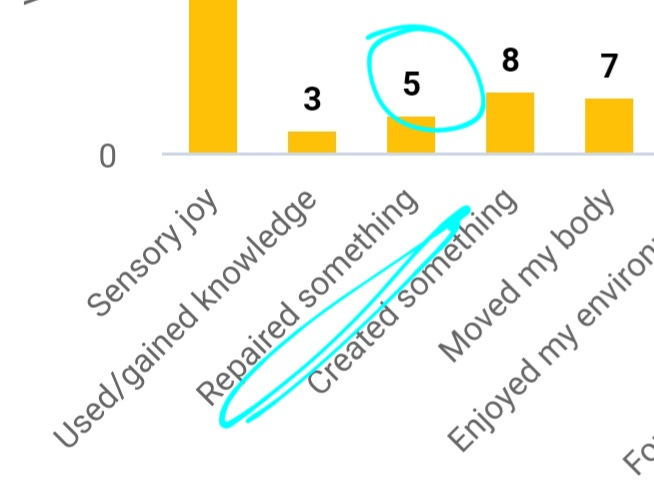
This didn't stop me feeling pangs of regret when tallying up the glimmers in my joy jar last month. I discovered repairing things had brought me notable joy over the past year. Five times I had found the technique and the patience to fix something and it had been remarkably fulfilling.
The first thing I repaired was my twin lens reflex camera. I took it out for a walk one day and, as I turned the ring to focus, the whole lens came off. I grumpily got it home and on my desk under an angle poise lamp ready for interrogation.
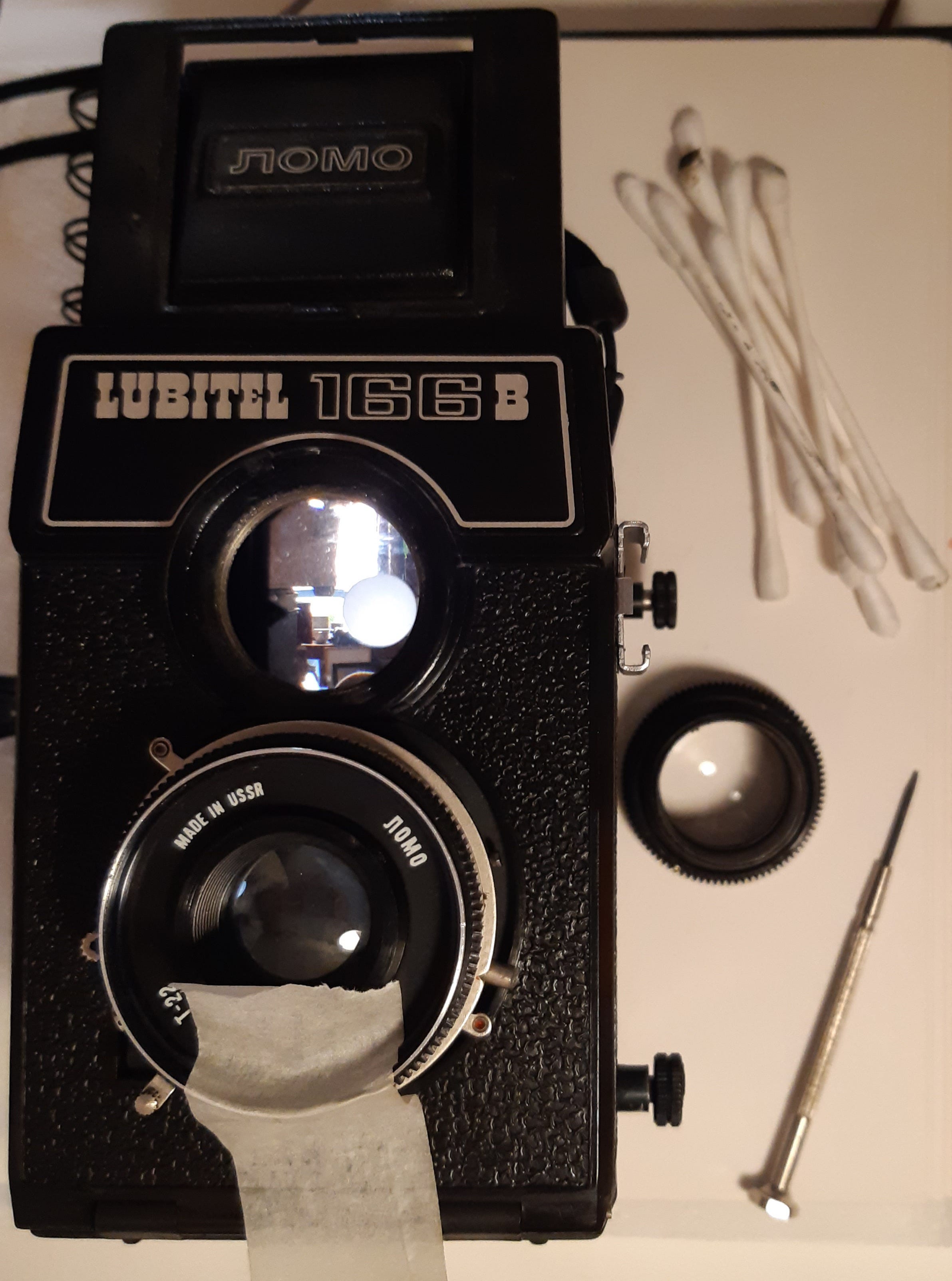
I do not have a mechanical mind. Doing numbers makes my brain ache. I do however enjoy and show some promise in the task of disassembly. I have disassembled a few things in my time (laptop, laminator, tape recorder, two telephones, a tweed jacket). But afterwards I always notice a momentary sagging of my spirit to discover all I've learned is how to disassemble the thing and what a lot of bits and bobs the thing has. There is no “…to see how it works” at the end of my “take it apart…”.
So I found a youtube video. I managed not to scream blah blah blah blah hurry up hurry up (this is what ADHD sounds like in my head) while I watched and waited for the specific answers to my specific questions. Apparently my task was going to involve calibration and cogs. How exciting. Most mechanical. Hmmm. Many (fiddly fiddly fuck my fucking fingers where did that grub screw just go?! squinty squinty shit and tits what am I an octopus optician?!) hours later I had aligned the lenses. They rotated around one another so smoothly, like the planets in the sky. I was a god. A goddamn god of engineering.
The next thing I fixed was a door that was sticking (youtube directed me to take a screwdriver to tighten the screws thereby drawing the hinge into the door jamb. Mmm. Such delicious workman waffle). Victory in this endeavour led me to a similar state of smug. I had aligned the door. I was a god. etc., etc.
I've only ever seen one episode of Tony Hancock's television comedy; it was an episode called “The Craftsmen”, about DIY. And I've just realised this post is getting rather long and I'm starting to sound like a self important fool. So if you're getting the blah blahs, and you enjoy old comedy episodes, especially ones featuring the self-important fool (I had strange comedy crushes on Chris Barrie, David Hyde Pierce and John Lithgow as a younger person. And god bless Patricia Routledge and Penelope Keith) you can watch the episode here.
I hope you enjoyed that. I went down a Tony Hancock rabbit hole and read that he died at the same age I am now, by suicide. That's very sad. And it brings me to the story of how trying to redo the silicone around the sink in the kitchen helped me to grieve.
Sorry Tony. I am really embarrassed. I should be ashamed of that segue. It is One Show worthy.
So I shall stop writing now and save that story for another time.
Brilliant as ever :-) I learned how to use a drill this year, at the grand age of 52. And now I can't stop putting up shelves and pictures. I get that godlike feeling every time!